Herpes simplex encephalitis
Herpes simplex (HSV) encephalitis is a common topic in the exam. The virus characteristically affects the temporal lobes - questions may give the result of imaging or describe temporal lobe signs e.g. aphasia
Features
Pathophysiology
Investigation
Treatment
The prognosis is dependent on whether aciclovir is commenced early. If treatment is started promptly the mortality is 10-20%. Left untreated the mortality approaches 80%
Features
- fever, headache, psychiatric symptoms, seizures, vomiting
- focal features e.g. aphasia
- peripheral lesions (e.g. cold sores) have no relation to presence of HSV encephalitis
Pathophysiology
- HSV-1 responsible for 95% of cases in adults
- typically affects temporal and inferior frontal lobes
Investigation
- CSF: lymphocytosis, elevated protein
- PCR for HSV
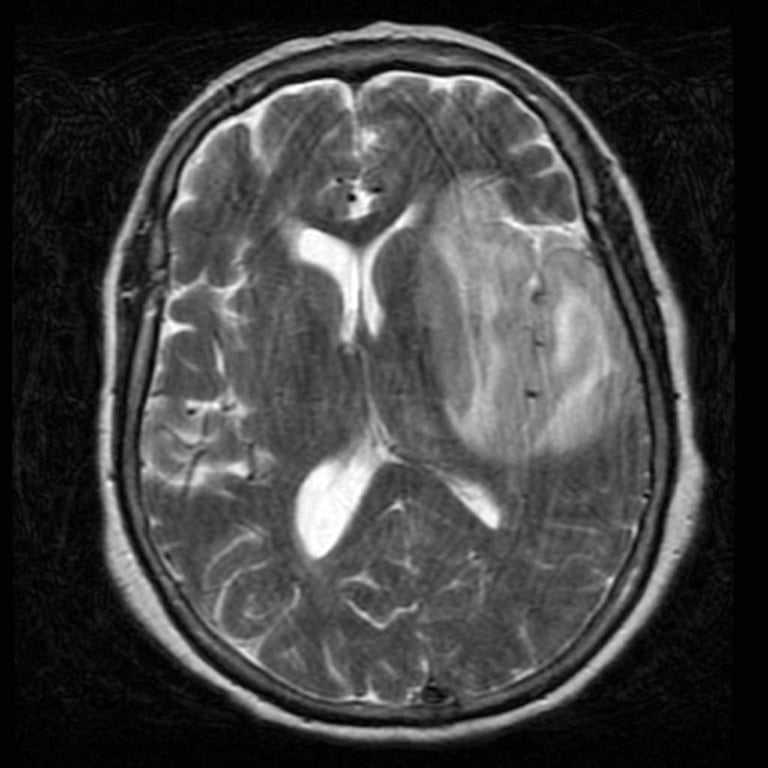
- CT: medial temporal and inferior frontal changes (e.g. petechial haemorrhages) - normal in one-third of patients
- MRI is better
- EEG pattern: lateralised periodic discharges at 2 Hz
Treatment
- intravenous aciclovir
The prognosis is dependent on whether aciclovir is commenced early. If treatment is started promptly the mortality is 10-20%. Left untreated the mortality approaches 80%
 | |
| © Image used on license from Radiopaedia | |
MRI of a patient with HSV encephalitis. There is hyperintensity of the affected white matter and cortex in the medial temporal lobes and insular cortex.