Achalasia
Failure of oesophageal peristalsis and of relaxation of lower oesophageal sphincter (LOS) due to degenerative loss of ganglia from Auerbach's plexus i.e. LOS contracted, oesophagus above dilated. Achalasia typically presents in middle-age and is equally common in men and women.
Clinical features
Investigations
Treatment
Clinical features
- dysphagia of BOTH liquids and solids
- typically variation in severity of symptoms
- heartburn
- regurgitation of food - may lead to cough, aspiration pneumonia etc
- malignant change in small number of patients
Investigations
- manometry: excessive LOS tone which doesn't relax on swallowing - considered most important diagnostic test
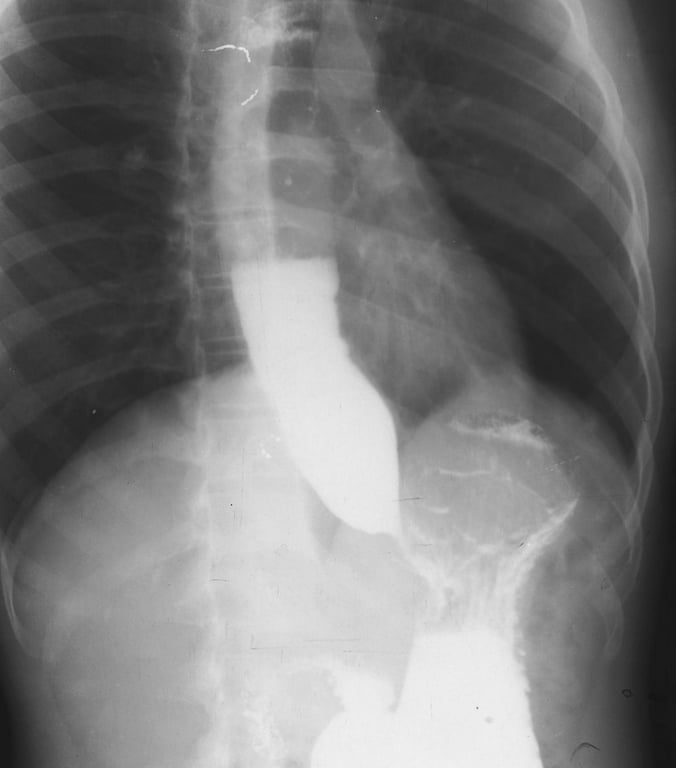
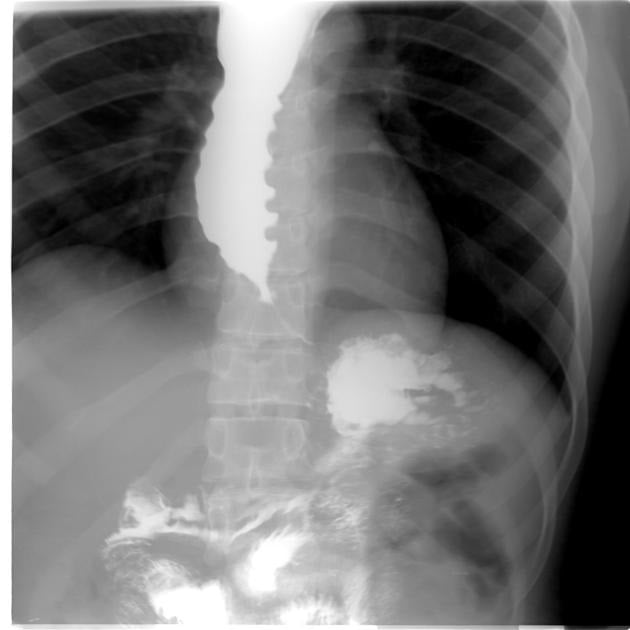
- barium swallow shows grossly expanded oesophagus, fluid level, 'bird's beak' appearance
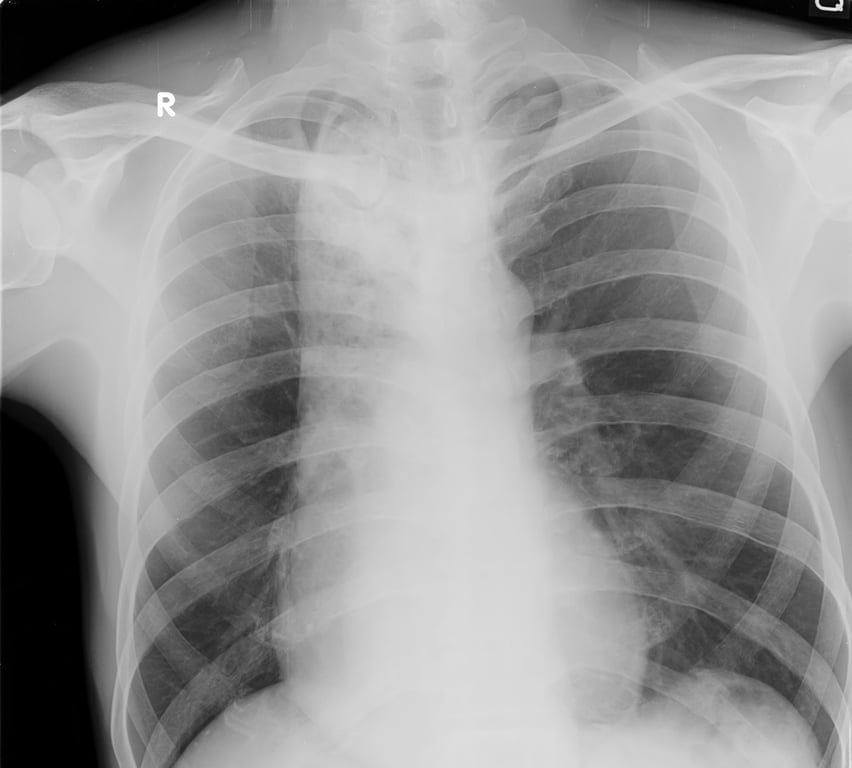
- CXR: wide mediastinum, fluid level
Treatment
- intra-sphincteric injection of botulinum toxin
- Heller cardiomyotomy
- balloon dilation
- drug therapy has a role but is limited by side-effects
 | |
| © Image used on license from Radiopaedia | |
This film demonstrates the classical 'bird's beak' appearance of the lower oesophagus that is seen in achalasia. An air-fluid level is also seen due to a lack of peristalsis
 | |
| © Image used on license from Radiopaedia | |
Mediastinal widening secondary to achalasia. An air-fluid level can sometimes be seen on CXR but it is not visible on this film
 | |
| © Image used on license from Radiopaedia | |
Barium swallow - grossly dilated filled oesophagus with a tight stricture at the gastroesophageal junction resulting in a 'bird's beak' appearance. Tertiary contractions give rise to a corkscrew appearance of the oesophagus