Acute epiglottitis
Definition
Acute epiglottitis is a condition in which there is inflammation and swelling of the epiglottis. Inflammation and swelling may also affect the soft tissues surrounding the epiglottis and therefore the term supraglottitis may be used.Background
Epiglottitis is a rare but potentially life-threatening condition due to the risk of complete airway obstruction.Clinical features
- Rapid onset of symptoms
- High fever
- Sore throat
- Odynophagia (painful swallowing)
- Muffled voice ('hot potato' voice)
- Stridor and difficulty breathing
- Drooling of saliva
- Tripod positioning
- Irritability
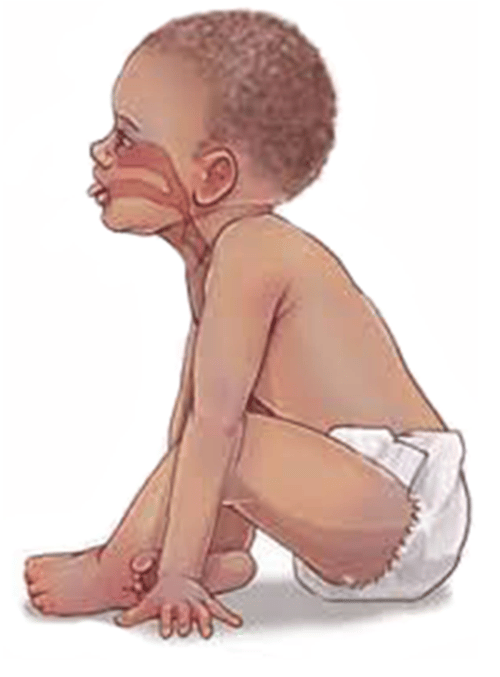 | |
Tripod position seen with the arms forming the front two legs of the tripod. Sen in epiglottitis. Click on image to enlarge
In patients with suspected acute epiglottitis examination of the the throat may trigger laryngospasm and obstruction. Some would advise that any agitation of the patient, especially if the patient is a child, should be avoided.
ED clinicians should avoid examination of the throat especially with a tongue depressor and performing any potentially upsetting procedures such as cannulation or venesection until the airway has been appropriately assessed and secured.
ED clinicians should avoid examination of the throat especially with a tongue depressor and performing any potentially upsetting procedures such as cannulation or venesection until the airway has been appropriately assessed and secured.
Epidemiology
- In children typically presents between 2-6 years of age
- In adults typically presents in 40s and 50s
- Adults more likely to have underlying medical condition
Aetiology
Streptococcus infections are now the most common cause in the UK.
Other bacterial agents include staphylococcus aureus, Haemophilus influenzae type b (may be found in those previously vaccinated), Pseudomonas, Moraxella catarrhalis & Mycobacterium tuberculosis.
Viruses e.g. herpes simplex, fungi e.g. candida, thermal and caustic injury, iatrogenic causes e.g. chemotherapy and trauma are other rarer causes of epiglottitis.
Epiglottitis was generally considered a disease of childhood due to infection with Haemophilus influenzae type B. In the UK & developed countries it is now more common in adults due to the immunisation programme (specifically the HiB vaccine).
Investigations
Imaging:- Fibre-optic laryngoscopy
- Lateral neck X-ray may show the thumb sign (AKA thumbprint sign) but not required in most cases where laryngoscopy is planned
- CT or MRI used to detect abscess, is suspected.
- Throat swabs: Only taken once airway is secured
- Blood cultures
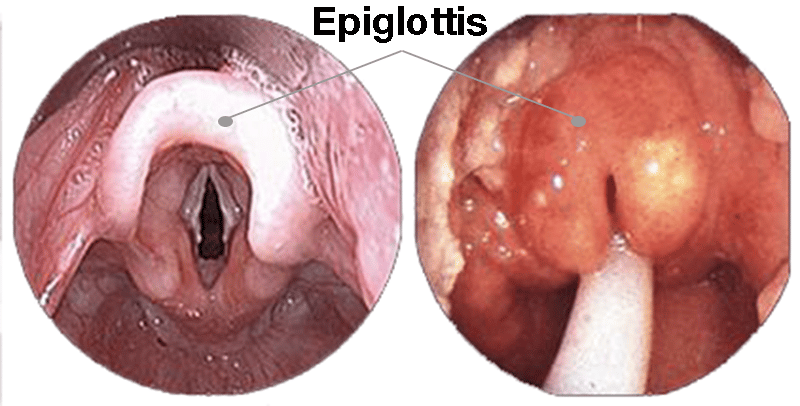 | |
Comparison of normal epiglottis (left side) and patient with epiglottitis and swollen epiglottis on right. Click on image to enlarge
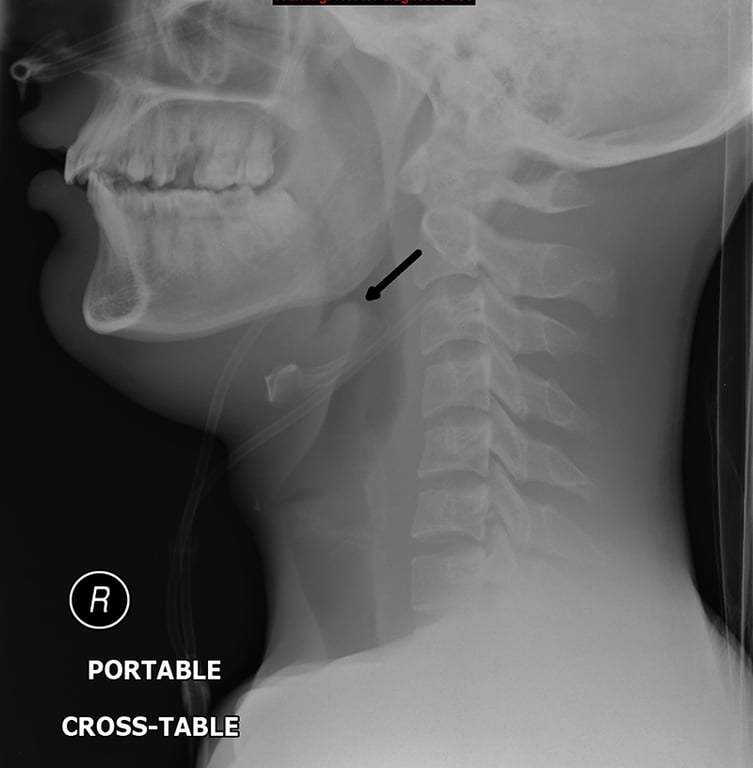 | |
The 'thumb sign' with arrow pointing to the oedematous and enlarged epiglottis. Image courtesy of radiopaedia.org, rID: 22906
Fibre-optic laryngoscopy is the gold standard investigation for diagnosing epiglottitis.
Patients with suspected epiglottitis should be urgently referred to ENT with a view to them performing laryngoscopy & having appropriate equipment on hand in the event emergency tracheostomy needs to be performed.
Patients with suspected epiglottitis should be urgently referred to ENT with a view to them performing laryngoscopy & having appropriate equipment on hand in the event emergency tracheostomy needs to be performed.
Management
- Assess & secure airway
- Intravenous or oral antibiotics
- Supplemental oxygen if intubation or tracheostomy planned
- Intubation +/- tracheostomy if airway is significantly compromised
- Steroids are sometimes used but evidence for their benefit is lacking
Note that most cases are managed with antibiotic therapy only and monitoring of the airway.