Hip problems in children
The table below provides a brief summary of the potential causes of hip problems in children
Image gallery
| Condition | Notes |
|---|---|
| Development dysplasia of the hip | Often picked up on newborn examination Barlow's test, Ortolani's test are positive Unequal skin folds/leg length |
| Transient synovitis (irritable hip) | Typical age group = 2-10 years Acute hip pain associated with viral infection Commonest cause of hip pain in children |
| Perthes disease | Perthes disease is a degenerative condition affecting the hip joints of children, typically between the ages of 4-8 years. It is due to avascular necrosis of the femoral head Perthes disease is 5 times more common in boys. Around 10% of cases are bilateral Features
|
| Slipped upper femoral epiphysis | Typical age group = 10-15 years More common in obese children and boys Displacement of the femoral head epiphysis postero-inferiorly Bilateral slip in 20% of cases May present acutely following trauma or more commonly with chronic, persistent symptoms Features
|
| Juvenile idiopathic arthritis (JIA) | Preferred to the older term juvenile chronic arthritis, describes arthritis occurring in someone who is less than 16 years old that lasts for more than three months. Pauciarticular JIA refers to cases where 4 or less joints are affected. It accounts for around 60% of cases of JIA Features of pauciarticular JIA
|
| Septic arthritis | Acute hip pain associated with systemic upset e.g. pyrexia. Inability/severe limitation of affected joint |
Image gallery
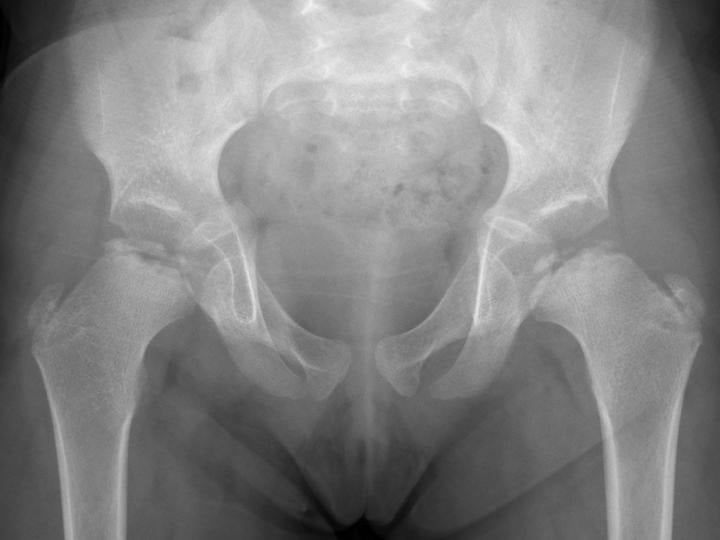 | |
| © Image used on license from Radiopaedia | |
Perthes disease - both femoral epiphyses show extensive destruction, the acetabula are deformed
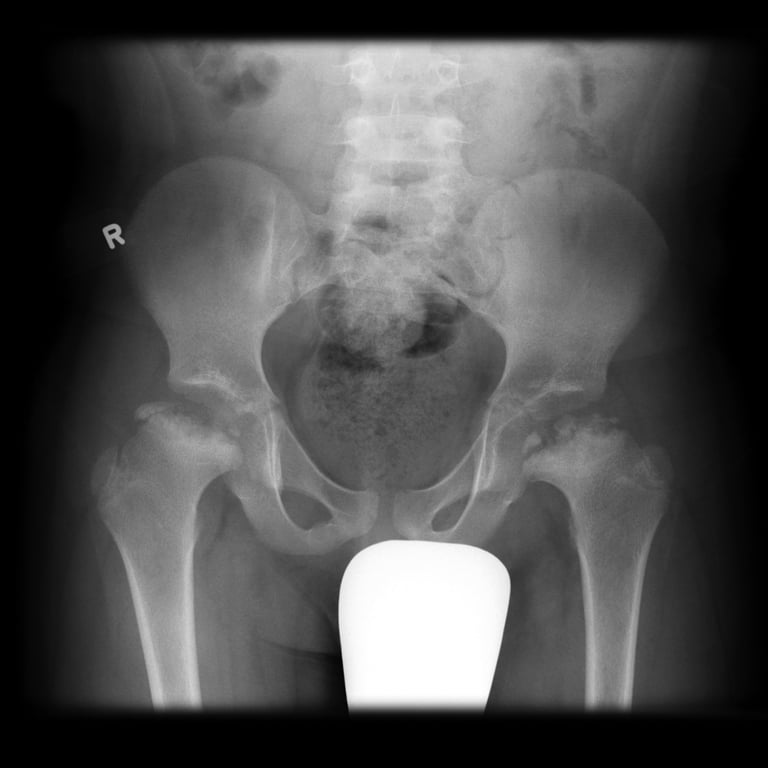 | |
| © Image used on license from Radiopaedia | |
Perthes disease - bilateral disease
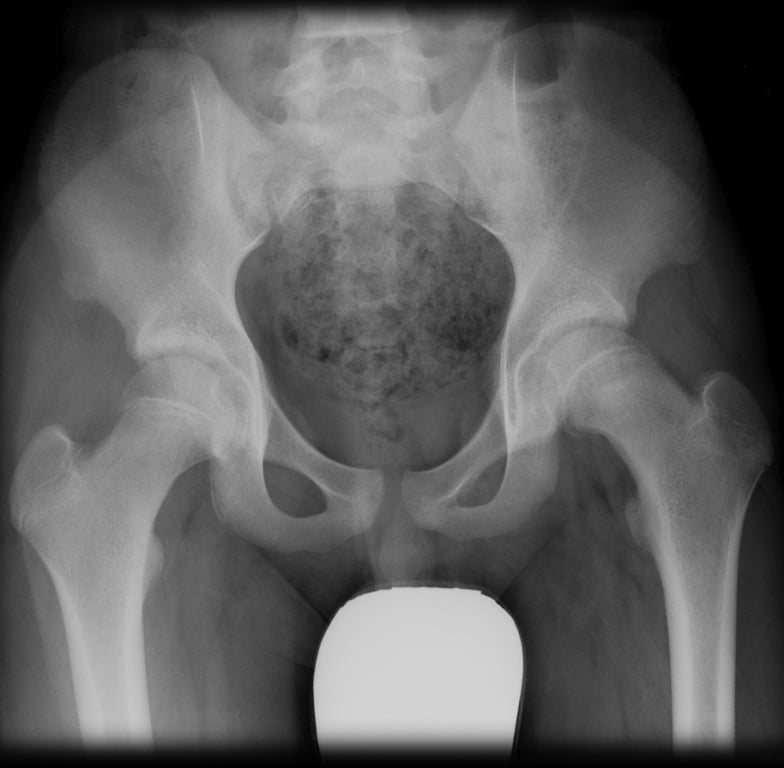 | |
| © Image used on license from Radiopaedia | |
Slipped upper femoral epiphysis - left side
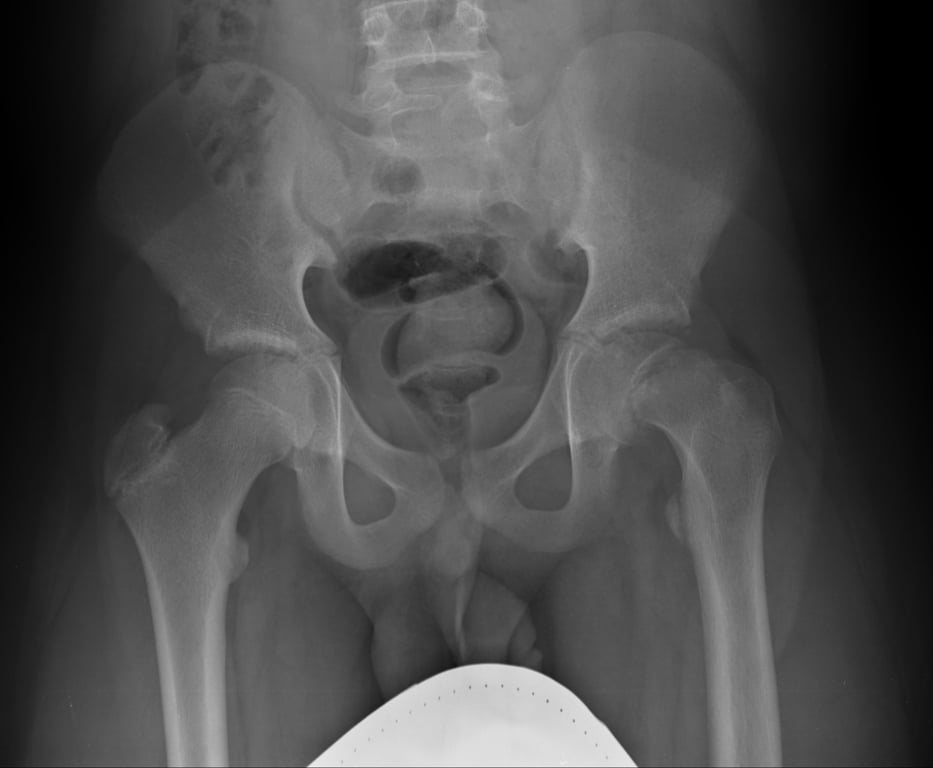 | |
| © Image used on license from Radiopaedia | |
Slipped upper femoral epiphysis - left side