Mumps
On this page
Mumps is an acute viral illness caused by RNA paramyxovirus and tends to occur in winter and spring. It is usually characterised by bilateral parotid swelling (in some cases there is unilateral swelling). Parotitis may be preceded by several days of non-specific prodromal symptoms such as fever, headache, malaise, myalgia and anorexia.
Clinical features
Diagnosis
Management
Complications
Spread
- by droplets
- respiratory tract epithelial cells → parotid glands → other tissues
- infective 7 days before and up to 9 days after parotid swelling starts (according to NICE). The CDC advise infectious period up to 5 days after the initial development of parotitis.
- incubation period: 14-25 days (average 17 days)
Clinical features
- fever
- malaise, muscular pain
- parotitis ('earache', 'pain on eating'): unilateral initially then becomes bilateral in 70%
- asymptomatic mumps infection is common, particularly in children
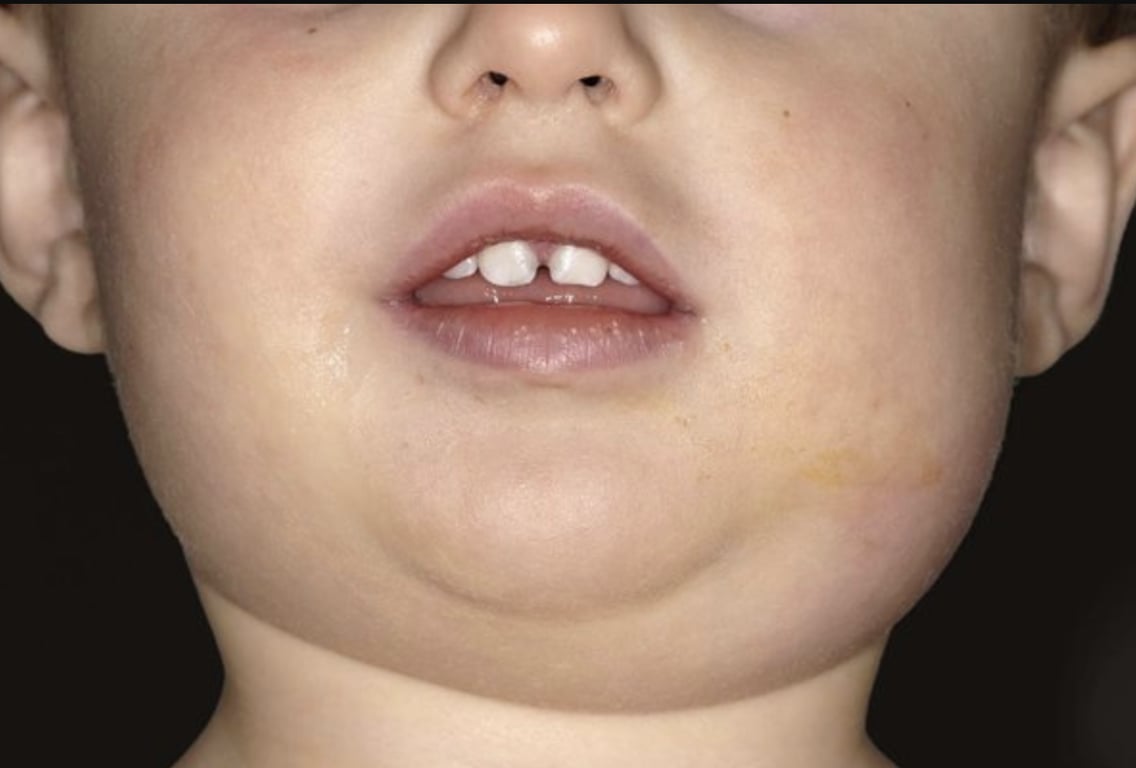 | |
Parotitis seen in a child with mumps. Click on image to enlarge
Diagnosis
- The diagnosis of mumps is usually clinical
- Cases should be confirmed by lab analysis. This may take the form of detection of salivary IgM mumps antibody or viral culture for real-time reverse transcriptase polymerase chain reaction (RT-PCR) testing.
Mumps is usually a self-limiting disease that resolves within 1–2 weeks, and most people recover without any long-term complications.
Patients should be advised to avoid school or work for at least 5 days after onset of swelling.
Patients should be advised to avoid school or work for at least 5 days after onset of swelling.
Prevention
- MMR vaccine: the efficacy is around 80%
- MMR vaccination schedule is two doses (first dose given at 1 year of age and second dose given at 3 years and 4 months old)
Management
- rest
- paracetamol for high fever/discomfort
- notifiable disease
Complications
- orchitis - uncommon in pre-pubertal males but occurs in 25% of post-pubertal males
- hearing loss - usually unilateral and transient
- meningoencephalitis - meningitis common complicating up to 15% of cases
- pancreatitis - complicating around 4-5% of cases
- oophoritis - occurs in approximately 5% of post-pubertal females
Summary of key knowledge:
- Incubation period 14-25 days
- UK vaccination given as part of MMR
- Natural infection is followed by lifelong immunity
- Spread via droplet transmission
- Infection often subclinical or mild flu like illness
- Orchitis and meningitis are common complications
- Epidemiology: Around 7000 cases per year in the UK but can spike in outbreaks (UK outbreak in 2005 saw over 43,000 cases in England and Wales)