Chickenpox
On this page
Chickenpox is caused by primary infection with varicella zoster virus (also known as Human Herpes Virus type 3). Shingles is reactivation of dormant virus in dorsal root ganglion
Chickenpox is highly infectious
Exposure to chickenpox
Post-exposure prophylaxis for varicella (chickenpox) is recommended for individuals at high risk of severe disease following significant exposure. This includes pregnant women, immunosuppressed individuals, and susceptible neonates. The preferred prophylactic intervention is the administration of varicella-zoster immunoglobulin (VZIG) as soon as possible, ideally within 96 hours of exposure, but it may be given up to 10 days post-exposure. If VZIG is unavailable, antiviral therapy with aciclovir may be considered.
Chickenpox is highly infectious
- spread via the respiratory route
- can be caught from someone with shingles
- infectivity = 4 days before rash, until 5 days after the rash first appeared*
- incubation period = 10-21 days
Transmission is usually via respiratory droplets but can occur via contact with vesicle fluid. Incubation period is typically 10 to 14 days but may be up to 3 weeks.
Patients are at highest infectivity from 48 hours before the rash appears to 5 days after the rash starts (at which point the vesicles usually start to crust)
Patients are at highest infectivity from 48 hours before the rash appears to 5 days after the rash starts (at which point the vesicles usually start to crust)
Clinical features
- fever initially
- prodromal symptoms may also include nausea, myalgia, anorexia, and headache
- itchy, rash starting on head/trunk before spreading. Initially macular then papular then vesicular
- systemic upset is usually mild
- Signs and symptoms tend to be more severe in older children/adults
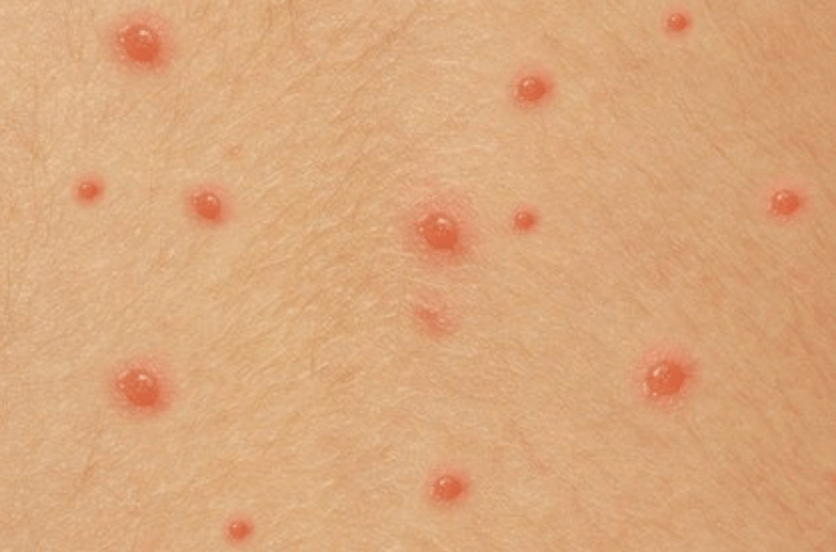 | |
Chickenpox rash typically progresses rapidly from macular to papular to vesicular lesions before crusting . Click on image to enlarge
Management
- keep cool, trim nails
- calamine lotion
- school exclusion: the 2016 Public Health England guidelines reverted to the traditional advice to exclude children until all vesicles have crusted over, rather than 5 days post onset of rash, which had been advocated over recent years
- Aciclovir is NOT recommended for otherwise healthy children with uncomplicated chickenpox but should be considered for an immunocompetent, non-pregnant adult or adolescent (aged 14 years or older) with chickenpox who presents within 24 hours of rash onset, particularly for people with severe chickenpox or those at increased risk of complications, such as smokers. The dose of oral aciclovir is 800 mg 5 times a day for 7 days.
- Aciclovir should also be considered for pregnant, breastfeeding, immunocompromised patients or neonates. It is advised to discuss prescribing with a specialist in these patient groups.
- Secondary bacterial infection of the lesions is not uncommon. Antibiotic therapy is indicated if this is the case.
- pneumonia
- encephalitis (cerebellar involvement may be seen)
- disseminated haemorrhagic chickenpox
- arthritis, nephritis and pancreatitis may very rarely be seen
Exposure to chickenpox
Post-exposure prophylaxis for varicella (chickenpox) is recommended for individuals at high risk of severe disease following significant exposure. This includes pregnant women, immunosuppressed individuals, and susceptible neonates. The preferred prophylactic intervention is the administration of varicella-zoster immunoglobulin (VZIG) as soon as possible, ideally within 96 hours of exposure, but it may be given up to 10 days post-exposure. If VZIG is unavailable, antiviral therapy with aciclovir may be considered.
 | |
| © Image used on license from Radiopaedia | |
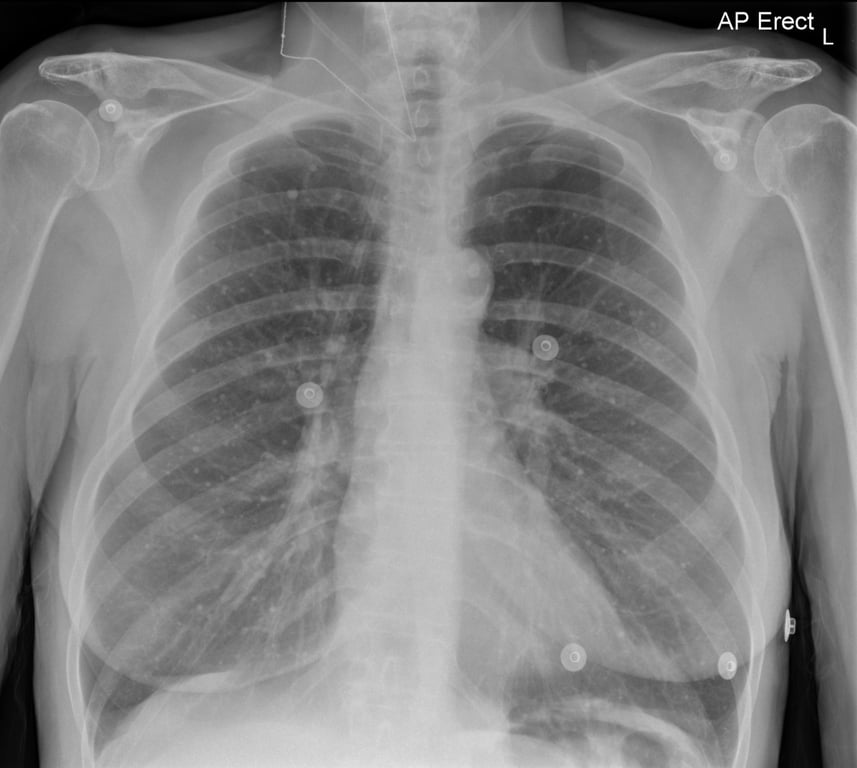
Chest x-ray showing miliary opacities secondary to healed varicella pneumonia. Multiple tiny calcific miliary opacities noted throughout both lungs. These are of uniform size and density suggesting calcification. There is no focal lung parenchymal mass or cavitating lesion seen.The appearances are characteristic for healed varicella pneumonia.