Sickle cell disease
On this page
Definition & genetics
Sickle cell disease (SCD) is a group of inherited haemoglobin disorders caused by a mutation in the β-globin gene (HBB). Homozygous HbSS is the most common severe form. Carriers (HbAS, sickle cell trait) are usually asymptomatic.The β-globin mutation involves substitution of valine for glutamic acid at position 6, producing HbS, which polymerises when deoxygenated, causing red cell sickling. Inheritance is autosomal recessive.
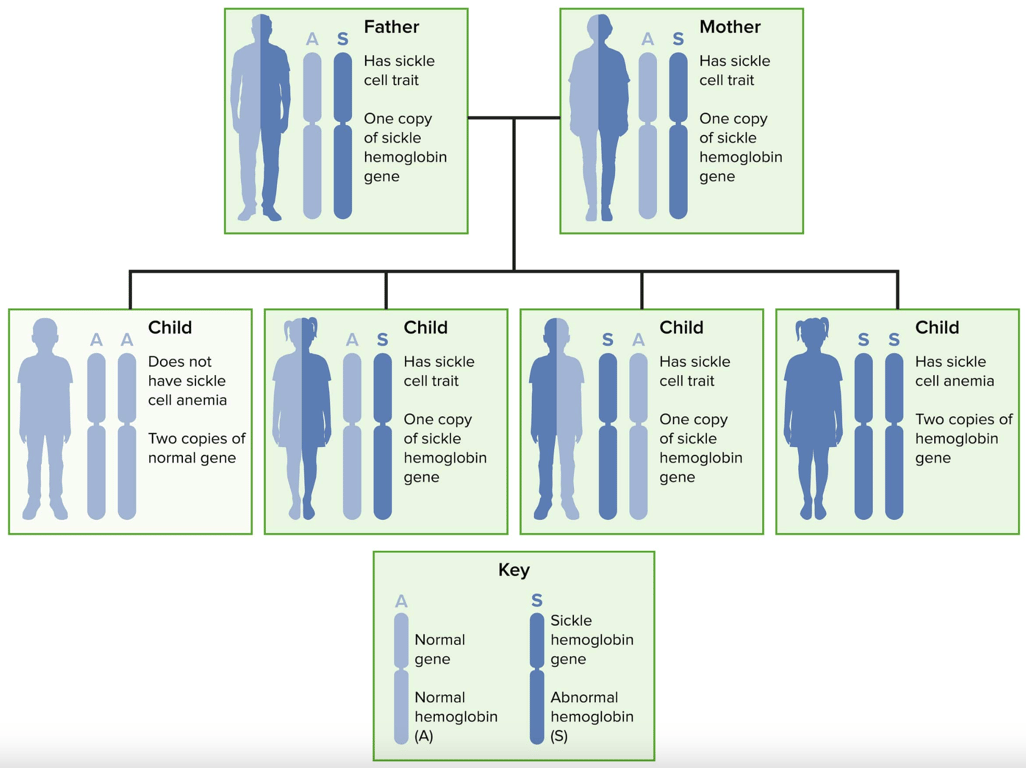 | |
Recessive Inheritance of SCD. Click on image to enlarge
Epidemiology
Highly prevalent in populations from West Africa, Caribbean, Middle East, Far East, Indian subcontinent. Carriers (up to 30% in West Africa) are protected against Plasmodium falciparum malaria, maintaining high prevalence.
Pathophysiology
- HbS polymerises when deoxygenated, causing red cells to sickle. These sickled cells are rigid and fragile, leading to vaso-occlusion and haemolysis
- Chronic haemolysis leads to anaemia, hyperbilirubinemia, gallstones.
- Vaso-occlusion causes painful crises, infarction of bones and visceral organs (spleen, lungs, CNS, kidneys).
- Functional asplenia develops over time, increasing infection susceptibility.
- Triggers for sickling include: infection, dehydration, acidosis, hypoxia, extreme temperatures.
Clinical features
Acute:
- Vaso-occlusive crisis (VOC): Bone pain (back, pelvis, ribs, long bones), abdominal pain (organ infarction), hand-foot syndrome in children (metaphyseal infarction), precipitated by infection/dehydration.
- Acute chest syndrome: Dyspnoea, hypoxia, chest pain, pulmonary infiltrates, leading cause of death in children and adults.
- Aplastic crisis: Usually following B19 parvovirus, with temporary cessation of erythropoiesis leading to severe anaemia.
- Visceral sequestration: Rapid pooling of red cells in spleen, liver, or lungs, causing severe anaemia.
- Infections (due to hyposplenism) e.g. Pneumococcal sepsis, Salmonella osteomyelitis.
Chronic:
- Anaemia: Typically mild (O₂ dissociation curve of HbS shifted right), Hb 60–90 g/L.
- Complications: Pigment gallstones, chronic leg ulcers, avascular necrosis (femoral/humeral heads), cardiomyopathy, pulmonary hypertension, proliferative retinopathy, priapism, renal papillary necrosis, stroke.
- Functional asplenia with increased susceptibility to encapsulated bacteria.
Laboratory findings
- Blood count: Normocytic anaemia, reticulocytosis.
- Peripheral smear: Sickle cells, target cells, Howell-Jolly bodies.
- Sickling test: Positive when deoxygenated.
- Haemoglobin electrophoresis / HPLC: Confirms HbS and variant types.
Diagnosis & screening
- Newborn screening in the UK leads to early diagnosis & reduces morbidity and mortality.
- Family and antenatal testing recommended.
- Acute diagnosis: FBC, peripheral smear, Hb electrophoresis, supportive labs (reticulocyte count, bilirubin).
Management
Acute / ED:
- Painful VOC: Rapid, effective analgesia (opioids), hydration (oral or IV), warmth, rest, treatment of precipitating factors.
- Acute chest syndrome: Oxygen, broad-spectrum antibiotics, incentive spirometry, pain control, transfusion (simple or exchange) as indicated.
- Severe anaemia / sequestration: Urgent transfusion; haematology consultation.
- Febrile patients: Immediate assessment, blood cultures, empirical antibiotics due to high infection risk.
Chronic & preventive:
- Hydroxycarbamide (hydroxyurea): Increases HbF, reduces VOCs and ACS episodes, requires monitoring.
- Regular transfusions: For stroke prevention, severe ACS, pre-operative optimization, or repeated VOCs; monitor for iron overload.
- Vaccination & prophylaxis: Pneumococcal, Haemophilus, meningococcal vaccines; oral penicillin in children.
- Lifestyle & general care: Good nutrition, hydration, hygiene, avoidance of triggers, folic acid supplementation.
- Pregnancy & anaesthesia: Require specialist management to prevent crises.
- Multidisciplinary follow-up: Haematology, pain management, psychosocial support, transition from paediatric to adult care.
Curative / advanced:
- Haematopoietic stem cell transplantation (HSCT): Potential cure in selected patients.
- Gene therapies: Emerging single-course options (e.g., exagamglogene autotemcel) for eligible patients.
- Experimental drugs: Aim to increase HbF synthesis or HbS solubility.
Prognosis
Improved life expectancy with newborn screening, prophylaxis, hydroxyurea, transfusions, and specialist care. Still associated with significant morbidity and reduced life expectancy, varying by phenotype, access to care, and comorbidity.