Disseminated intravascular coagulation (DIC)
On this page
Background
Disseminated Intravascular Coagulation (DIC) is an acquired syndrome wherein systemic activation of coagulation and fibrinolytic pathways leads to widespread clot formation and simultaneous bleeding. A paradoxical state also referred to as consumptive coagulopathy or defibrination syndrome.Pathophysiology
Trigger mechanisms such as severe infection, trauma, obstetric complications, cancer, or major surgery expose tissue factor to the circulation. This activates the extrinsic coagulation pathway, accelerating thrombin generation and fibrin deposition throughout the vasculature.Excessive thrombin formation consumes platelets and clotting factors, resulting in both microvascular thrombi and bleeding due to depletion of coagulation components.
Endothelial activation and inflammation trigger the fibrinolytic system (e.g. tPA release), leading to elevated fibrin degradation products such as D-dimers.
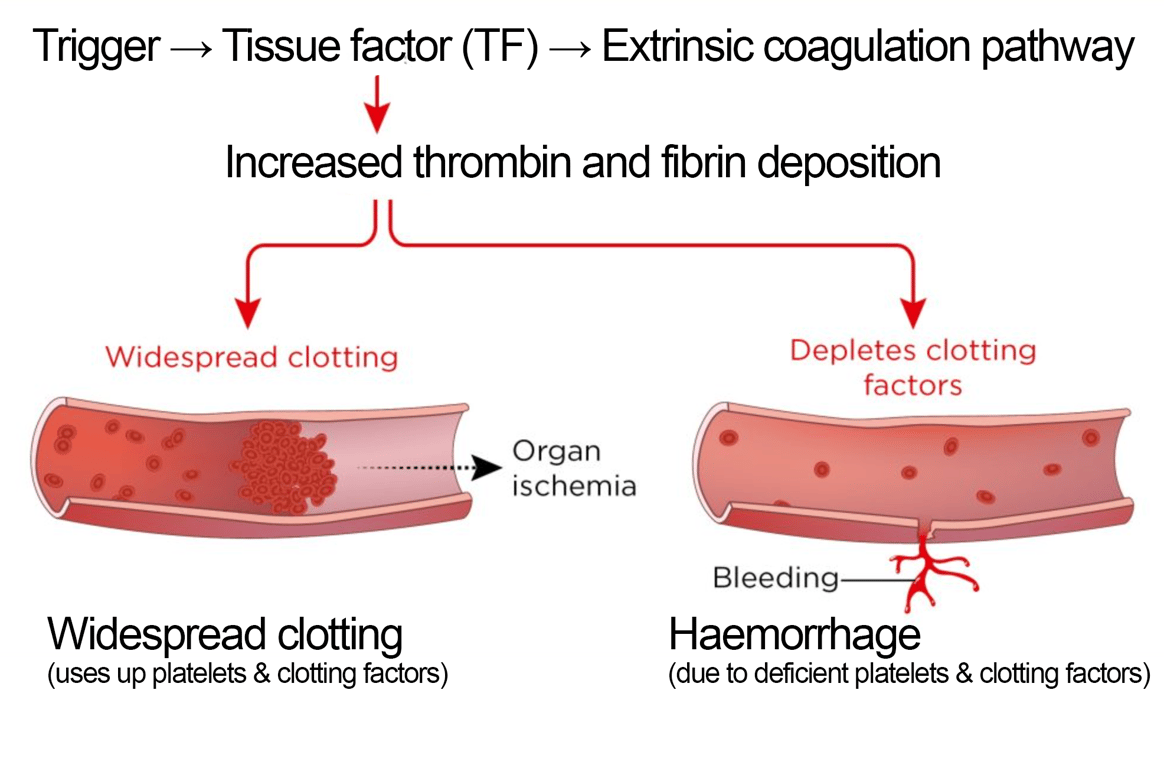 | |
Disseminated intravascular coagulation (DIC). Click on image to enlarge
Clinical features & types
- Acute DIC: Rapid onset (hours–days), often dramatic bleeding (e.g., mucosal, surgical sites, or organ hemorrhage) and multi‑organ dysfunction.
- Chronic/subclinical DIC: Slower progression (weeks–months), often presenting with thrombosis or minimal bleeding
- Common triggers: Sepsis (especially Gram-negative), obstetric emergencies (e.g., placental abruption, amniotic fluid embolism), malignancy (notably APL), major trauma, burns, and severe pancreatitis.
| Cause Category | Specific Examples | Mechanism |
|---|---|---|
| Infections | Sepsis (Gram-negative/positive), viral (e.g., COVID-19, dengue), fungal/parasitic infections | Cytokine-driven tissue factor expression by monocytes/endothelium |
| Malignancy | Acute promyelocytic leukemia (APL), mucinous adenocarcinomas (pancreas, lung, prostate) | Tumor cell release of procoagulants (e.g., tissue factor, cancer procoagulant) |
| Obstetric Complications | Amniotic fluid embolism, placental abruption, intrauterine fetal demise, HELLP syndrome | Placental/fetal tissue factor enters maternal circulation |
| Trauma & Burns | Crush injury, major trauma, extensive burns, head injury | Massive tissue damage → TF release and endothelial injury |
| Vascular Disorders | Aortic aneurysm, giant hemangioma (Kasabach-Merritt phenomenon) | Sequestration and chronic activation of clotting cascade |
| Immunologic/Other | Snakebite (some species), heat stroke, hemolytic transfusion reaction | Direct coagulation activation or endothelial damage |
Laboratory findings
Typical laboratory results include:
- Thrombocytopenia (low platelets)
- Prolonged PT and aPTT
- Elevated D‑dimer or fibrin degradation products
- Low fibrinogen levels
- Peripheral smear may show schistocytes (fragmented RBCs) from microvascular haemolysis and shear stress.
Scoring systems like the International Society on Thrombosis and Haemostasis (ISTH) DIC score incorporate these laboratory markers and clinical context to support diagnosis.
| Parameter | Result | Score |
|---|---|---|
| Platelet count | >100 x 10⁹/L <100 x 10⁹/L <50 x 10⁹/L | 0 1 2 |
| PT | <3s prolonged ≥3s but <6s >6s | 0 1 2 |
| Fibrinogen | >1.0 g/L <1.0 g/L | 0 1 |
| FDP/D-dimer | No increase Moderate increase (2500–5000) Strong increase (>5000) | 0 2 3 |
Interpretation:
- Scores ≥5 are compatible with overt DIC
- Scores <5 suggests non-overt DIC (monitor regularly)
The ISTH formally defined DIC in 2001 as
An acquired syndrome characterised by the intravascular activation of coagulation with a loss of localisation arising from different causes. It can both originate from and cause damage to the microvasculature, which, if sufficiently severe, can produce organ dysfunction
An acquired syndrome characterised by the intravascular activation of coagulation with a loss of localisation arising from different causes. It can both originate from and cause damage to the microvasculature, which, if sufficiently severe, can produce organ dysfunction
Management principles
Treatment of the underlying cause is one of the key principles which may include antibiotics for sepsis, surgery for major trauma, cesarean sections for obstetric causes, chemotherapy for malignancy etc.Whilst treating the underlying cause the patient will also require supportive care. Supportive therapy includes:
- Cardiorespiratory support: These patients are often severly ill and may require supplemental oxygen, ventilation and/or inotropic support.
- Haemorrhage: Replace platelets, fibrinogen (via cryoprecipitate) and coagulation factors (via FFP).
- Thrombosis-predominant or chronic DIC: Low‑dose heparin may be considered if bleeding risk is low
- Multidisciplinary input: haematology input advised in severe cases
Prognosis
- DIC carries high mortality: estimates range from 20% to over 50% depending on severity and context, particularly high in sepsis-associated cases.
- Occurs in approximately 1% of hospital admissions, but rises significantly in critical illnesses like sepsis or major trauma.
Key points table
| Notes | |
|---|---|
| What is DIC | Widespread coagulation and fibrinolysis leading to thrombosis & haemorrhage |
| What causes DIC | Sepsis, trauma, obstetric emergencies, malignancy, others |
| Typical labs | ↓ Platelets, ↑ PT/aPTT, ↑ D‑dimer, ↓ fibrinogen, schistocytes |
| Types | Acute (bleeding), Chronic (thrombosis) |
| Treatment | Address cause, transfusion as needed, consider heparin in select cases |
| Prognosis | High mortality (20–50%), common in critical illness |