Atlas and axis
On this page
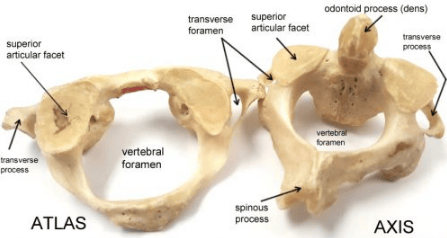 | |
Atlas and axis basic anatomy
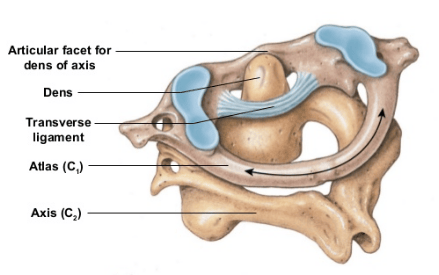 | |
Illustration showing position of atlas and axis. Appreciate the transverse ligament and how this gives stability but allows rotational movement
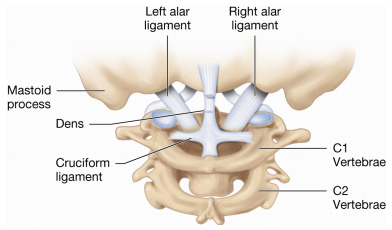 | |
View showing position of cruciform ligament relative to atlas, axis and skull base
Video explaining anatomy of the atlas and axis
Atlanto-occipital joint
The atlas takes part in the atlanto-occipital joint with the skull above and atlanto-axial joints with the axis below. These joints together permit free movement of the head.The atlanto-occipital joint is a synovial joint formed between the occipital condyles of the skull and facets on the superior surface of the atlas (the facets can be seen in the images above). The primary movement allowed by this joint is flexion and extension (nodding).