Dermatophytes
Dermatophytes are a common label for a group of three types of fungus that commonly causes skin disease in animals and humans. Three genera of filamentous fungi are implicated in dermatophytosis:
The most common types of dermatophyte disease are:
Transmission
Dermatophyte infections are typically transmitted via close personal contact by the following routes:
Diagnosis
Often clinical, based on characteristic appearance and distribution. Wood’s lamp examination may aid diagnosis in Microsporum infections (fluorescent green)
Laboratory confirmation is indicated when:
Laboratory confirmation is via direct microscopy with KOH preparation and fungal culture on appropriate samples (skin scrapings, nail clippings, or plucked hairs)
Management: Athlete's foot and Tinea corporis
Management of both conditions is usually via self help measures and topical treatments. Terbinafine cream or an imidazole such as clotrimazole, or miconazole are typically used. Topical cortcosteroids may be used in combination if there is marked inflammation but courses should be limited to 7 days whilst antifungal cream is continued for 1-4 weeks depending on antifungal used and patient factors.
Confirmation of diagnosis involves skin scrapings for mycology culture. These tests typically take weeks so treatment is often initiated whilst awaiting results.
In extensive or severe disease oral antifungal therapy may be used. Oral terbinafine is first line. Second line agents include oral itraconazole or oral griseofulvin.
Management: Tinea capitis (Scalp ringworm)
Ringworm of the scalp is managed differently to dermatophyte infection of the body and feet. Scalp skin and hair samples may be sent for microscopy and mycology culture. First line treatment is usually with oral antifungals as shown below:
A topical antifungal shampoo or cream is often co-prescribed to reduce the risk of transmission to others. Shampoos such as selenium sulfide or ketoconazole shampoo can be used at least twice weekly for 2-4 weeks. Imidazole cream may be used in children <5 years of age once daily for 7 days.
If antifungal treatment is required then topical amorolfine 5% nail lacquer is an option suitable for those with only very early, distal, and superficial nail involvement (or if oral antifungal treatment is contraindicated). Treatment is typically continued for 6 months for fingernails and 9–12 months for toenails.
If dermatophyte nail infection has been confirmed and there is extensive nail involvement or topical treatment has failed oral terbinafine daily is first-line. Oral itraconazole is an alternative. Treatment is typically required for 6-24 weeks. LFTs should be checked after 4–6 weeks of terbinafine treatment.
- Trichophyton spp.
- Microsporum spp.
- Epidermophyton spp.
The most common types of dermatophyte disease are:
- Tinea corporis (Ringworm of the body)
- Tinea pedis (Athlete's foot)
- Tinea capitis (Scalp ringworm)
- Onychomycosis (Fungal nail infection)
Transmission
Dermatophyte infections are typically transmitted via close personal contact by the following routes:
- Direct skin-to-skin contact
- Contact with contaminated objects e.g. towels, floors, shoes
- Zoonotic transmission from pets or livestock (especially in Microsporum infections)
Diagnosis
Often clinical, based on characteristic appearance and distribution. Wood’s lamp examination may aid diagnosis in Microsporum infections (fluorescent green)
Laboratory confirmation is indicated when:
- Diagnosis is uncertain
- Infection is refractory to treatment
- Oral antifungal therapy is considered
Laboratory confirmation is via direct microscopy with KOH preparation and fungal culture on appropriate samples (skin scrapings, nail clippings, or plucked hairs)
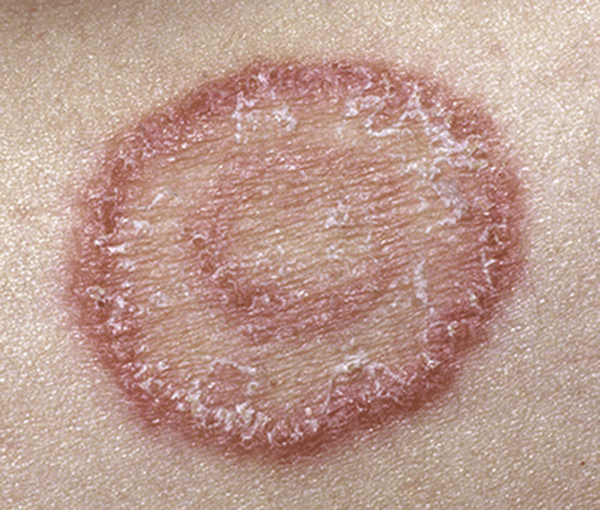 | |
Tinea corporis (Ringworm). Note the classic annular lesion with thickened peripheral border and central clearing
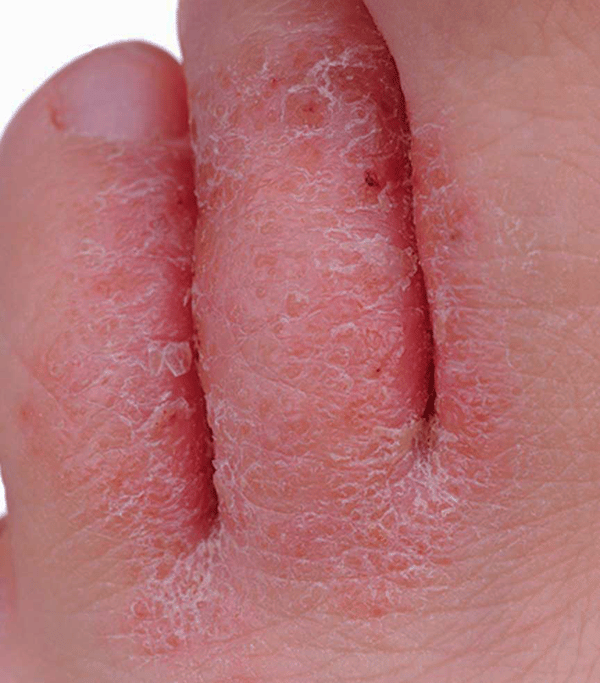 | |
Tinea pedis (Athlete's foot). Similar lesion characteristics to those above. Lesions often starts between digits. May spread and involve large areas of the foot. Skin cracking between toes is common.
Management: Athlete's foot and Tinea corporis
Management of both conditions is usually via self help measures and topical treatments. Terbinafine cream or an imidazole such as clotrimazole, or miconazole are typically used. Topical cortcosteroids may be used in combination if there is marked inflammation but courses should be limited to 7 days whilst antifungal cream is continued for 1-4 weeks depending on antifungal used and patient factors.
Confirmation of diagnosis involves skin scrapings for mycology culture. These tests typically take weeks so treatment is often initiated whilst awaiting results.
In extensive or severe disease oral antifungal therapy may be used. Oral terbinafine is first line. Second line agents include oral itraconazole or oral griseofulvin.
Self help measures for managing fungal infections:
- Wear loose-fitting clothes made of cotton or a material designed to keep moisture away from the skin.
- Maintain good hygiene by washing affected skin areas daily.
- After washing dry thoroughly, especially in the skin folds.
- Avoid scratching affected skin, as this may spread infection to other sites.
- Do not share towels, and wash them frequently, to reduce the risk of transmission.
- Wash clothes and bed linen frequently to eradicate fungal spores.
- If a child is affected, it is not necessary to exclude them from school or nursery
Management: Tinea capitis (Scalp ringworm)
Ringworm of the scalp is managed differently to dermatophyte infection of the body and feet. Scalp skin and hair samples may be sent for microscopy and mycology culture. First line treatment is usually with oral antifungals as shown below:
- If the person lives in an urban area, start treatment with terbinafine for 4 weeks.
- If the person lives in a rural area, start treatment with griseofulvin for 4-8 weeks
A topical antifungal shampoo or cream is often co-prescribed to reduce the risk of transmission to others. Shampoos such as selenium sulfide or ketoconazole shampoo can be used at least twice weekly for 2-4 weeks. Imidazole cream may be used in children <5 years of age once daily for 7 days.
Management of fungal nail infection
Fungal nail infection is difficult to eradicate. Treatment is not essential in many cases especially where asymptomatic. Good self care advice includes regularly trimming nails, wearing cotton socks, discarding potentially contaminated old footwear and good hygiene practices.If antifungal treatment is required then topical amorolfine 5% nail lacquer is an option suitable for those with only very early, distal, and superficial nail involvement (or if oral antifungal treatment is contraindicated). Treatment is typically continued for 6 months for fingernails and 9–12 months for toenails.
If dermatophyte nail infection has been confirmed and there is extensive nail involvement or topical treatment has failed oral terbinafine daily is first-line. Oral itraconazole is an alternative. Treatment is typically required for 6-24 weeks. LFTs should be checked after 4–6 weeks of terbinafine treatment.