Hookworm
On this page
Background
Hookworm infections are caused by parasitic nematodes, primarily Ancylostoma duodenale and Necator americanus, which inhabit the small intestine of humans.Epidemiology
Globally, hookworm infections affect approximately 450 million people. The prevalence is highest in areas with poor sanitation and hygiene practices, particularly in tropical and subtropical regions. In the UK hookworm infections are rare and typically associated with international travel to endemic areas.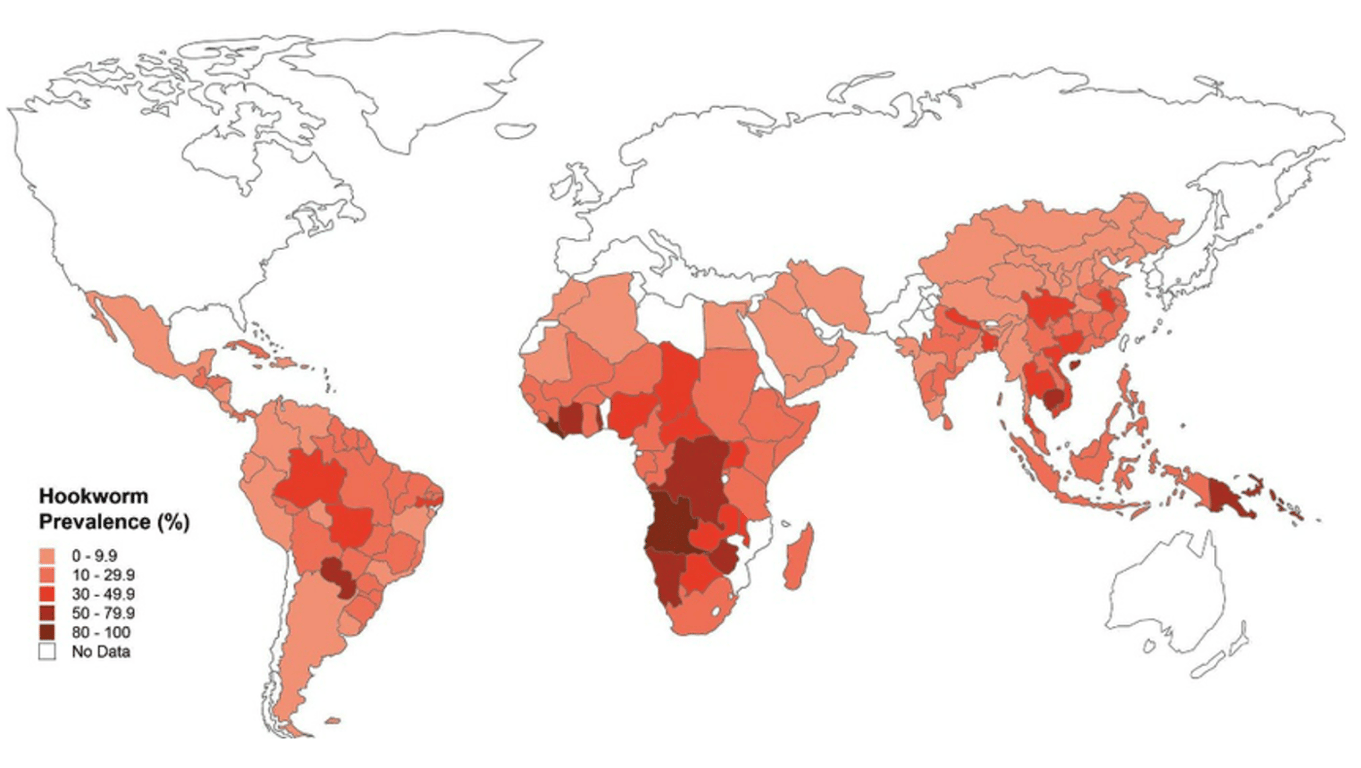 | |
Global distribution of human hookworm infection. Click on image to enlarge
Migratory Cycle
Upon contact with contaminated soil, infective larvae penetrate the skin, often through the feet. They enter the bloodstream and are transported to the lungs, where they penetrate the alveoli. The larvae then ascend the bronchial tree to the pharynx, are swallowed, and eventually reach the small intestine. There, they mature into adult worms, attach to the intestinal mucosa, and feed on blood.
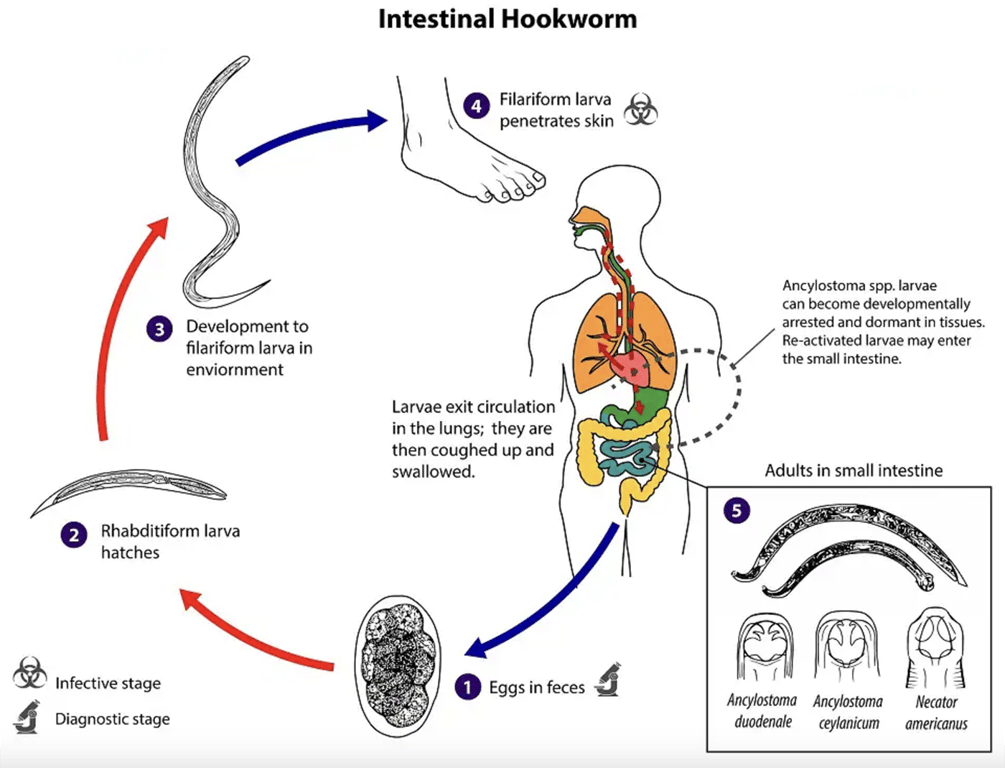 | |
Lifecycle and migration of human hookworm. Click on image to enlarge
The severity of hookworm infection correlates with the parasite load:
- Low parasite load: often asymptomatic or mild symptoms.
- Moderate to High Parasite Load: Can lead to significant blood loss, resulting in iron-deficiency anaemia and protein malnutrition.
Clinical features
Symptoms vary depending on the stage of infection and parasite burden:
- Skin penetration: Localised itching and rash at the entry site.
- Larval migration: Cough and wheezing due to pulmonary involvement.
- Intestinal phase: Abdominal pain, diarrhoea, loss of appetite, weight loss, fatigue, and signs of anaemia. In children, chronic infection can impair physical and cognitive development.
Diagnosis
Diagnosis is primarily through microscopic examination of stool samples to detect hookworm eggs. Full blood count may show eosinophilia and anaemia.Treatment
First-line treatment involves anthelmintic medications such as albendazole or mebendazole.Iron supplementation may be necessary to address anaemia.
Preventive measures in endemic areas include improving sanitation, wearing footwear to prevent skin contact with contaminated soil, and health education.