Fibrinolytic drugs
Fibrinolytic drugs with a history of use in the UK include streptokinase, tenecteplase, alteplase, reteplase and urokinase.
Indications
Fibrinolytic drugs may be used in the following situations if they meet certain criteria:
The value of thrombolytic drugs for the treatment of myocardial infarction has been established. NICE currently recommend fibrinolysis in patients with STEMI who present within 12 hours of symptoms and in whom PCI is not possible within 120 mins (see image below)
Streptokinase and alteplase have been shown to reduce mortality. Reteplase and tenecteplase are also licensed for acute myocardial infarction. Thrombolytic drugs are indicated for any patient with acute myocardial infarction for whom the benefit is likely to outweigh the risk of treatment. Trials have shown that the benefit is greatest in those with ECG changes that include ST segment elevation (especially in those with anterior infarction) and in patients with bundle branch block. Patients should not be denied thrombolytic treatment on account of age alone because mortality in the elderly is high and the reduction in mortality is the same as in younger patients. Alteplase should be given within 6–12 hours of symptom onset, reteplase and streptokinase within 12 hours of symptom onset, but ideally all should be given within 1 hour; use after 12 hours requires specialist advice. Tenecteplase should be given as early as possible and usually within 6 hours of symptom onset.
The evidence base for thrombolysis for acute ischaemic stroke indicates benefit if delivered within 4.5 hours. Alteplase is recommended by NICE for the treatment of acute ischaemic stroke (tenecteplase [unlicensed use] may also be used.
Alteplase, streptokinase and urokinase can be used for other thromboembolic disorders such as deep-vein thrombosis and pulmonary embolism.
Urokinase and certain preparations of alteplase are also licensed to restore the patency of occluded intravenous catheters and cannulas blocked with fibrin clots.
Contraindications
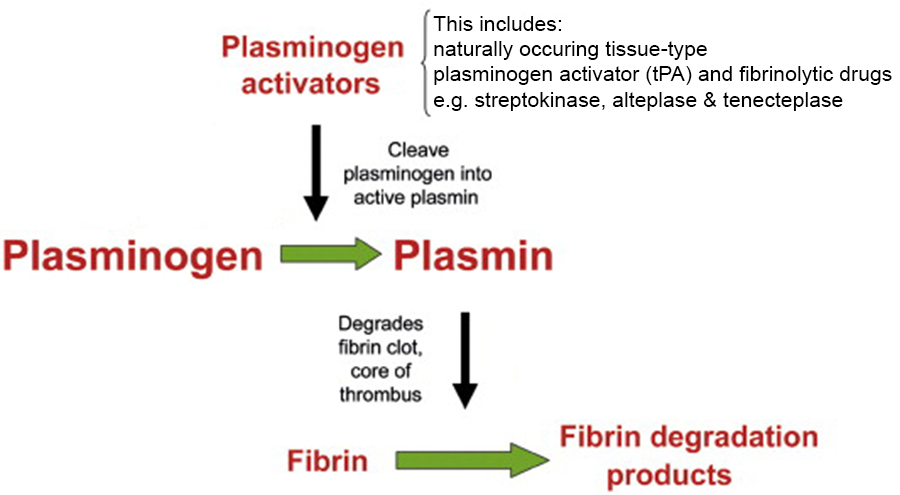
Fibrinolytic drugs act as thrombolytics by activating plasminogen to form plasmin, which degrades fibrin and so breaks up thrombi.
 | |
Click on image to enlarge
Indications
Fibrinolytic drugs may be used in the following situations if they meet certain criteria:
- Myocardial infarction
- Acute ischaemic stroke
- Vascular occlusive disease e.g. pulmonary embolism
- Occluded central venous access devices
The value of thrombolytic drugs for the treatment of myocardial infarction has been established. NICE currently recommend fibrinolysis in patients with STEMI who present within 12 hours of symptoms and in whom PCI is not possible within 120 mins (see image below)
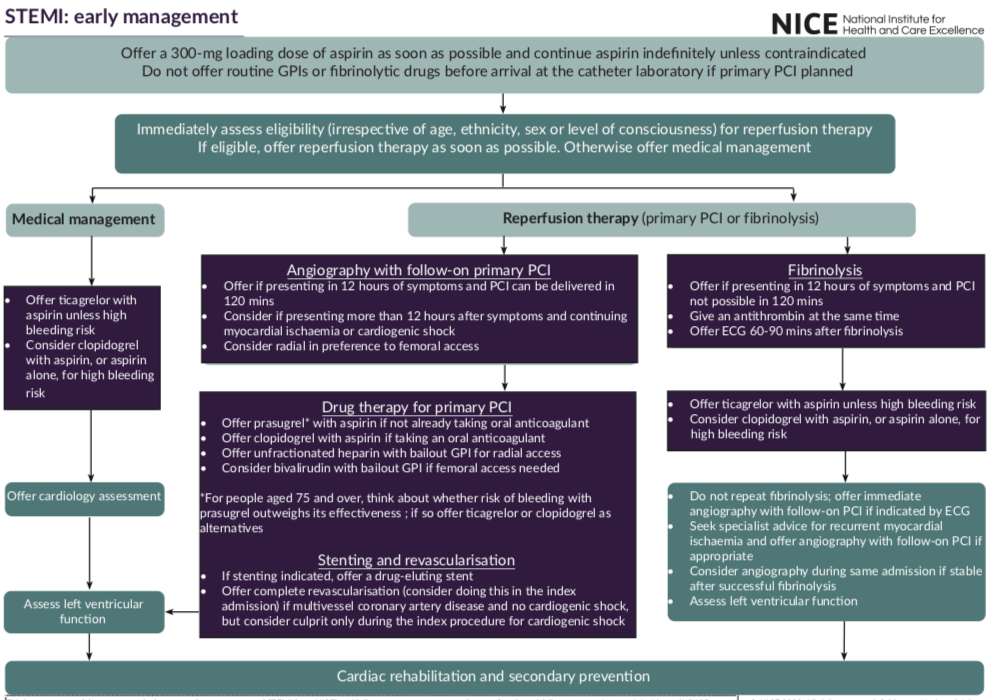 | |
NICE flow chart on the early management of STEMI Click on image to enlarge
Streptokinase and alteplase have been shown to reduce mortality. Reteplase and tenecteplase are also licensed for acute myocardial infarction. Thrombolytic drugs are indicated for any patient with acute myocardial infarction for whom the benefit is likely to outweigh the risk of treatment. Trials have shown that the benefit is greatest in those with ECG changes that include ST segment elevation (especially in those with anterior infarction) and in patients with bundle branch block. Patients should not be denied thrombolytic treatment on account of age alone because mortality in the elderly is high and the reduction in mortality is the same as in younger patients. Alteplase should be given within 6–12 hours of symptom onset, reteplase and streptokinase within 12 hours of symptom onset, but ideally all should be given within 1 hour; use after 12 hours requires specialist advice. Tenecteplase should be given as early as possible and usually within 6 hours of symptom onset.
The evidence base for thrombolysis for acute ischaemic stroke indicates benefit if delivered within 4.5 hours. Alteplase is recommended by NICE for the treatment of acute ischaemic stroke (tenecteplase [unlicensed use] may also be used.
Alteplase, streptokinase and urokinase can be used for other thromboembolic disorders such as deep-vein thrombosis and pulmonary embolism.
Urokinase and certain preparations of alteplase are also licensed to restore the patency of occluded intravenous catheters and cannulas blocked with fibrin clots.
Common side effects
- Anaphylactic reaction
- Angina pectoris
- Cardiac arrest
- Cardiogenic shock
- Chills
- CNS haemorrhage
- Ecchymosis
- Fever
- Haemorrhage
- Haemorrhagic stroke
- Heart failure
- Hypotension
- Recurrent ischaemia (when used in myocardial infarction)
- Nausea and vomiting
- Pericarditis
- Pulmonary oedema
Contraindications
- Acute pancreatitis
- Aneurysm
- Aortic dissection
- Arteriovenous malformation
- Bacterial endocarditis
- Bleeding diatheses
- Coagulation defects
- Coma
- Heavy vaginal bleeding
- History of cerebrovascular disease (especially recent events or with any residual disability)
- Neoplasm with risk of haemorrhage
- Oesophageal varices
- Pericarditis
- Recent gastro-intestinal ulceration
- Recent haemorrhage
- Recent surgery (including dental extraction)
- Recent trauma
- Severe hypertension