Prostate gland
Prostate gland: key points
- Exocrine gland surrounding urethra in males
- Function is to contribute alkaline fluid to semen
- Innervated by inferior hypogastric plexus
- Lymph from the prostate drains to the internal iliac, external iliac and sacral lymph nodes. Its lymph drainage explains the spread in metastatic disease.
- It is located anterior to the rectum and can be palpated through the anterior rectal wall
- Normal prostate volume is 20-30 cm³
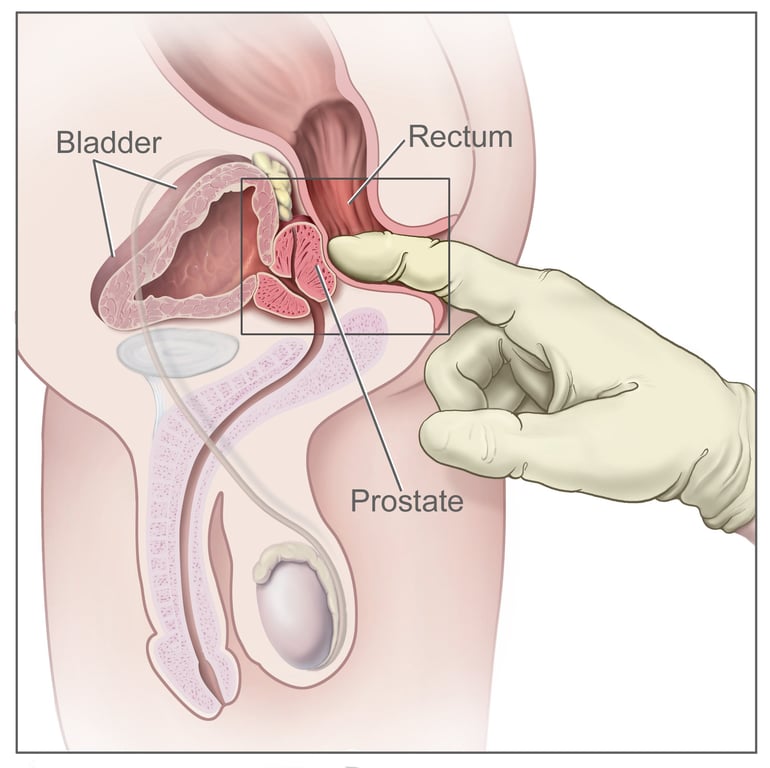 | |
| Wikipedia | |
Lobes & Zones
The prostate can be divided anatomically into 5 lobes:
- Anterior lobe
- Median/middle lobe
- Posterior lobe
- Lateral lobes (Left and Right)
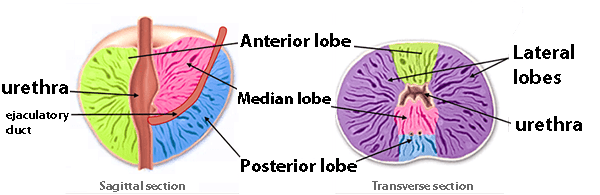 | |
Illustration of the lobes of the prostate
The prostate may also be divided into 3 zones:
- central zone
- peripheral zone
- transitional zone
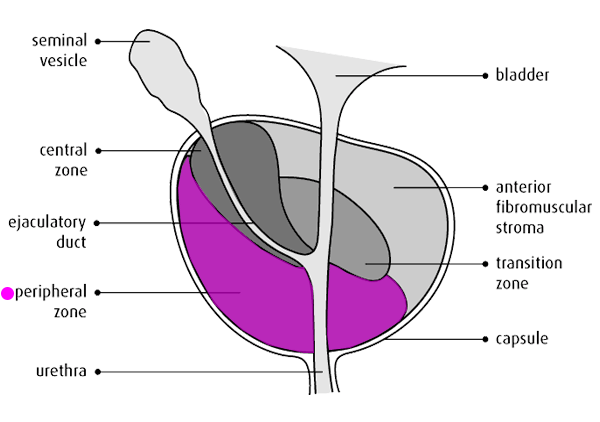 | |
Illustration of the zones of the prostate. The peripheral zone is highlighted as this is the area where prostate cancers typically begin. Note this view is from the the opposite side to the sagittal section