Hierarchy of evidence
The hierarchy of evidence is a system used to rank the relative strength of results obtained from different types of medical research. It helps guide clinical decision making by identifying the most reliable sources of evidence. From highest to lowest, the typical hierarchy is:
1. Systematic reviews and meta-analyses – Combine results from multiple high-quality studies (usually randomized controlled trials) to provide the most robust evidence.
2. Randomized controlled trials (RCTs) – Participants are randomly assigned to intervention or control groups, reducing bias and providing strong evidence of causality.
3. Cohort studies – Follow groups of people over time to assess the impact of exposures on outcomes; useful when RCTs are not feasible.
4. Case-control studies – Compare individuals with a condition (cases) to those without (controls) to identify potential risk factors. This level may also include Cross-sectional studies which analyze data from a population at a single point in time; useful for assessing prevalence but limited for causal inference.
5. Case reports and case series – Descriptive studies of individual or grouped cases; useful for generating hypotheses but low in evidentiary strength.
6. Expert Opinion and Anecdotal Evidence – Based on clinical experience or consensus, but highly susceptible to bias and least reliable.
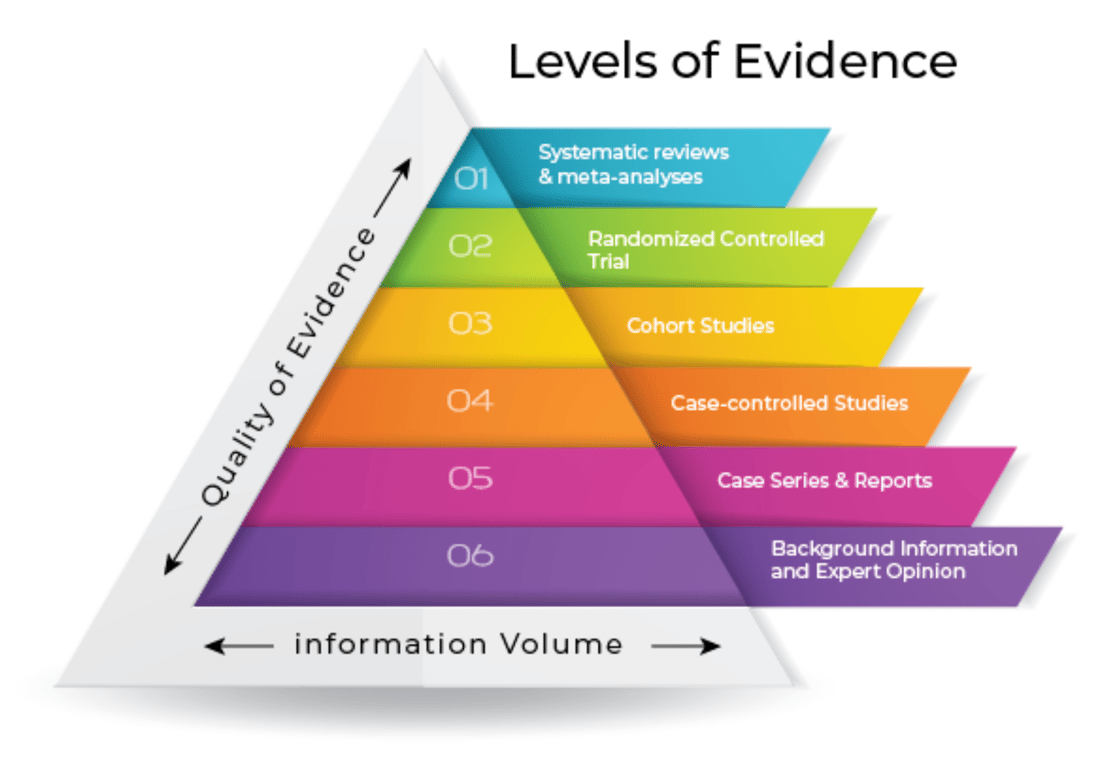 | |
Levels of evidence. Click on image to enlarge